Showing posts with label mparntwe. Show all posts

Friday, April 23, 2021

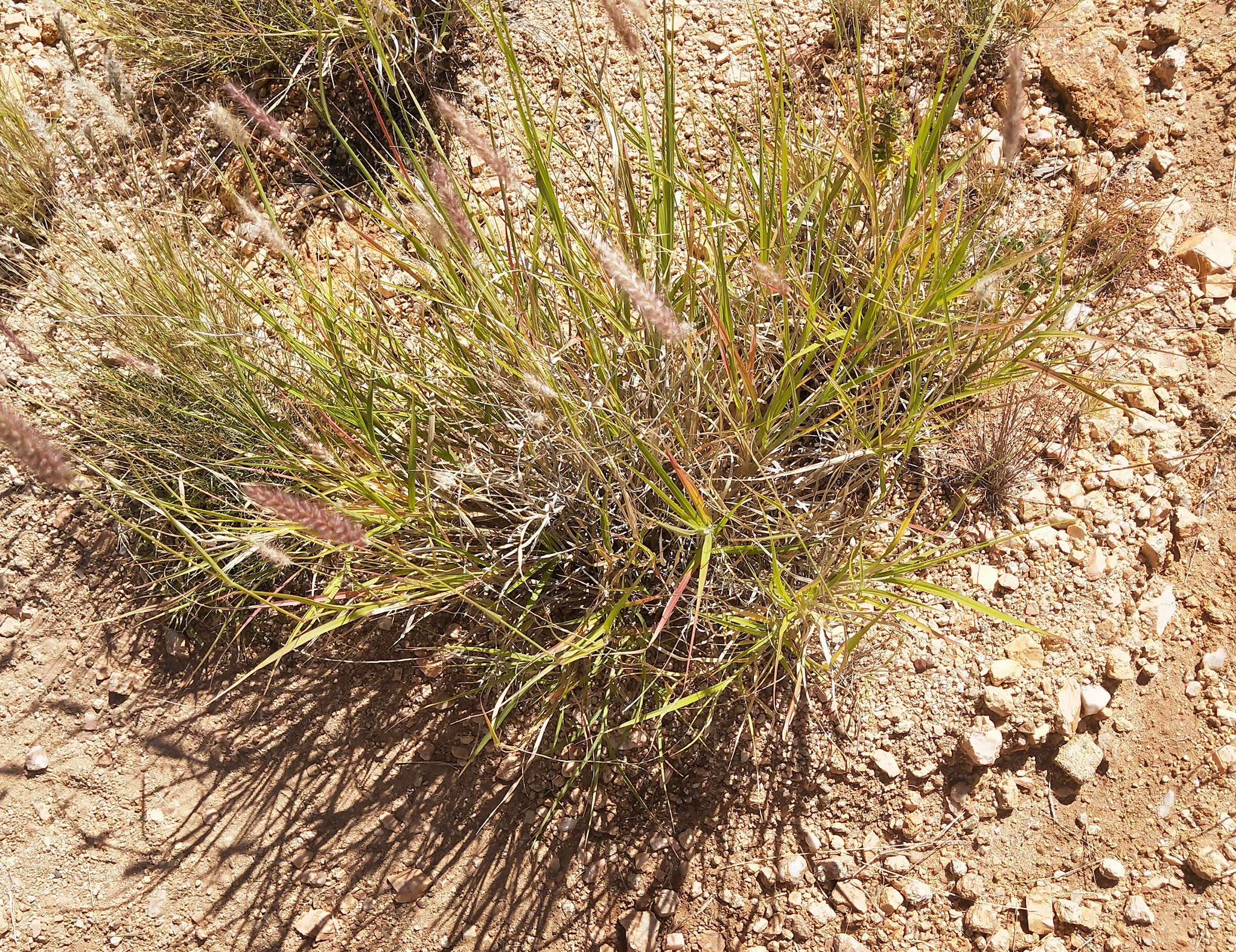
some plants of Alice Springs (Mparntwe)

Pictures taken along the Larapinta trail, near the telegraph station

Buffel grass (invasive species, which is everywhere)

Woolly oat grass

Dead finish with its unforgiving rigid and thorny leaves providing protection against water loss and predators

Origin of the name: Either, when this one dies then everything else is finished, or, in a drought the desperate rabbits try to eat its leaves and die in the branchces!

Silver witchetty, the witchetty grubs (yum) feed on the sap inside the roots

Close up of a witchetty showing flowers, seed pod and leaves

Dog wood, identified through the "Central Australian Flora" brochure

Mulga, can survive in the harshest conditions (in 2019 Alice Springs had its lowest rainfall on record, 67.6 mm). The hardwood is useful for fencing and as a fuel for campfires.

Not identified

Monday, February 03, 2020

the Todd river

Alice Springs locals say that when you see the Todd flow three times you'll stay for life. In 2018 we had 161 consecutive days without rain so I was doubtful that I would ever see the Todd flow.

But today after more than 2 years here I saw it flow for the first time:

Saturday, June 08, 2019

Hey Pedrea!


Best to watch on the YouTube link

When you are rich and famous don't forget your old friends ;-)

More: Cheeky comedy 'Robbie Hood' premieres Friday 5 July on SBS On Demand

Director Dylan River said:
“Robbie Hood is my gift to the youth of Alice Springs and the rest of the world. It's inspired by my own life and the first-hand experiences of my friends and family. The show is a combination of the highs and lows of our upbringing in a small desert town that we have a love hate relationship with. I am thrilled to see these stories come to life and find their home on SBS.”

Saturday, March 16, 2019

bushwalking near Alice Springs

I did a Scratch project about this, here

Tuesday, January 08, 2019

Gillen's Modest Record

I'm reading Gillen's Modest Record, his journal of the Spencer-Gillen anthropological expedition across Australia in 1901-02. The Editor, Philip Jones, has done a wonderful job. From Gillen's repeating of what he learnt from aboriginal people I have learnt more about their culture (very strange from our perspective) than any other source.

There's a photo on page 93 taken by Gillen of the Alice Springs Telegraph Station, "snugly nestling in the valley of the Todd", where he "once ruled", from a hill. I tried to duplicate by climbing Trig Hill and my photo definitely does bear a resemblance. By the way, you can see a beautiful 360 degrees panorama of the MacDonnell ranges from Trig Hill.
Why is Trig Hill called Trig Hill? This is explained on a plaque at the top. Five years after the telegraph line was completed, the South Australian government sent a party of surveyors to central Australia. They arrived on 16th November 1877. Trig stations are points where latitude, longitude and height have been determined. They are used for making maps. Trig Hill was the first one, setup by Charles Winnecke.

I noticed another walking trail, named after Bradshaw, the telegraph station Postmaster who replaced Gillen in 1899. I did that walk earlier today, saw a couple of kangaroos and an amazing, hardy tree, and came out at the Todd River. Took another photo just to demonstrate that it is still not flowing!

Thursday, December 27, 2018

Mparntwe Dreaming, part two: wild dog creators

In this Dreaming story much of the west side of Alice Springs has an association with a dog fight. After reading a little booklet about this I initially climbed Anzac Hill and took some photos. But, subsequently, I found I could get better shots of the features I wanted from Billy Goat Hill and Annie Meyer Hill, so I'll show you those pics.

Most of the features of the Mt Gillen ridge were formed by the activities of the wild dog.

Mt Gillen or Alhekulyele from Billy Goat Hill (Akeyulerre)
There was an extended battle between a local dog and an interloper from the west, or in some versions from the south-east. They fought over a female.

Various features of the ridge are named after the resting place of the female, dog hair released during the fight and intestines from a wounded dog. The fighting raged to Heavitree Gap, where the intruder was finally beaten and buried.

Heavitree Gap (Ntaripe) from Billy Goat Hill (Akeyulerre).
To show how things are connected this one shows Heavitree Gap (Ntaripe) from Anzac Hill with Billy Goat Hill (Akeyulerre) in the middle ground
The next one shows the relation between Mt Gillen and Heavitree Gap. I took this from Annie Meyer Hill, which you access through the Olive Pink Botanic Garden:
After defeating his antagonist at Heavitree Gap, the wild dog creator being metamorphosed into a boulder embedded near Billy Goat Hill. I looked for that boulder but couldn't find it.

At various locations nearby are rocks that represent the puppies of the adult wild dogs. Some of the puppies are at the back of Beaurepaires, which is near Anzac Hill.

Puppies outside Beaurepaires (two pics)
There is a large sacred rock in the Anzac Hill (Atnelkentyarliweke) car park
Choritja, where Charles Creek flows into the Todd River is regarded as the real central point of Mparntwe (Alice Springs)

No water today, but this is where Charles Creek flows into Todd River. They say you are not a true resident of Alice Springs until you have seen the Todd flow three times!

The stone below is associated with a great, white, dog man who came from Latrika (away to the West) and wanted to kill the dog men at Choritja (Stuart or Alice Springs).

When they saw him the local Gnoilya wild dog men sang out, wunna, mbainda erinna, numma - This is your camp, sit down

So he sat down quietly and remained there, the stone arising to mark the spot. If the stone is rubbed by old men all the camp dogs begin to growl and grow fierce. The last man to rub it was one of the old inkatos (headmen) who did so soon after the white man came in order to try to make the dogs bite them.
- from The Arunta Volume 1 by Sir Balwin Spencer and F.J. Gillen

Reference: A Town Like Mparntwe: a guide to the Dreaming tracks and sites of Alice Springs by David Brooks, illustrations by Shawn Dobson (first published in 1991)

Part one was a novice discovers the caterpillar

Saturday, December 22, 2018

a novice discovers the caterpillar

For the past week I’ve been venturing out before it gets too hot and visiting some of the traditional sites here in Alice Springs or Mparntwe in Arrente language. If you visited me in Alice, then here are some of the places I would take you. This has been part of my own self education. I hasten to add that I’m still a beginner when it comes to the local habitat and cultures.

Casual visitors or tourists will notice the Yeperenye shopping centre in the heart of town and perhaps also Yipirinya School (spellings are not standardised), which is not far from the town centre. Pronounced Yep-ah-rin-ya. Yeperenye is the most important of three caterpillars that play the major role in the local Dreaming stories.
Delving more into that we discover the caterpillar dreaming of the Arrente people. The caterpillars are the major creative ancestors of Mparntwe.

After this introduction, I might take you to the Araluen Cultural Precinct to view the giant caterpillar sculpture.
There are informative plaques inside the caterpillar. One of the caretakers writes:
“My name is Kwementyeye Rice Furber, I am one of the kwetengurles (caretakers) for the Yeperenye Dreaming. The Yeperenye Dreaming is a totem of my mother and my grandfather (that’s my mum’s dad) and her grandfather (her father’s father). In a cultural way they are the owners of the Yeperenye Dreaming.

I am very proud to see the sculpture being built here on Mparntwe land. I feel the Yeperenye story should be known and told to the locals and visitors alike, and I hope Yeperenye Dreaming will be respected in the land of its Dreaming. I am very glad and happy for the youngsters who are involved in building this Yeperenye Sculpture and I am very glad of all who took part in it and I thank you for it.”
A section of another plaque provides us with some information about the caterpillar itself and how strongly it is represented in the Arrernte language:
“The Arrernte language includes a unique name for every stage of development for yeperenye caterpillars, ie. egg, lava, pupa, emerging moth, moth etc. The name yeperenye derives from ayepe (tar vine) and arenye (belonging to).

The yeperenye are the best known of the sacred caterpillars. They encompass at least two different species and a rich diversity of colour forms. Yeperenye caterpillars burrow into soft soil to depths of about 10cm, sometimes forming a small underground chamber. The fully developed intelyaplyape (hawkmoths) emerge with 12-24 days from their pupal cases underground or beneath leaf litter to feed, mate and lay their eggs in the space of a few days.”
Next up we might take a 10 minute drive to Emily Gap (Anthwerrke).
It’s really special down there, well that is, apart from the damn flies. It is the majestic site where the caterpillar beings originated. Photos from inside the gap, where there are rock paintings illustrating the story, are not permitted. So, I guess you’ll have to come to Alice if you want to see it.
After they created Anthwerrke the caterpillars spread out towards the town area and produced the topographical features that we now see.

The Yeperenye was just one of three species of caterpillar involved. The other species were Ntyarlke and Utnerrengatye.

On the East side of the Todd River, there is a small ridge where the Ntyarlke caterpillars crossed the river.

In 1983 the government began to construct Barrett Drive in order to facilitate access to the casino. But, they had a problem: The ridge created by the Ntyarlke registered and protected under the government’s own Aboriginal Sacred Sites Act extended into the desired path of the road. There was some discussion with the Aboriginal custodians about how to protect the site. In the beginning, the government appeared to be listening.

Then at Christmas 1983 one of the custodians walked out on the site and saw that the tail of the caterpillar had been bulldozed. The government, running out of patience, had done this in the quiet of holiday time. The photo shows the ridge which represents the caterpillar, that used to extend to where the road now is. My back is to the Todd River.
Barrett Drive has since been referred to as Broken Promise Drive among the Arrernte people of Mparntwe.

Well, I still don’t know much about the caterpillars but that is a beginning. And there are more than caterpillars to this story. Next up, I’ll tell you about the wild, creator dogs.

Reference:
A Town Like Mparntwe: a guide to the Dreaming tracks and sites of Alice Springs (first published in 1991) by David Brooks, illustrations by Shawn Dobson